
Polk County, Florida’s real estate market in 2026 is showing steady stabilization and balanced dynamics across both residential and rural sectors. As one of the fastest-growing regions in Central Florida, understanding local property values, assessment trends, and tax implications is essential for homeowners, buyers, and investors alike.
Whether you are tracking home prices in Lakeland or evaluating vacant land values near Winter Haven, this comprehensive guide breaks down the latest 2026 property market metrics in Polk County, FL.
Overview of Polk County Property Values in 2026
As of early 2026, the average home value in Polk County, Florida sits at approximately $298,600, reflecting stable, long-term market correction and growth. The median home sale price hovering around $314,000 shows moderate year-over-year adjustments compared to the peak market of previous years.
Overall market trends indicate a healthy annual stabilization rate of about 2% to 3%. This consistent leveling off offers balanced negotiation power for both buyers navigating inventory options and sellers aiming for competitive returns.
Market Drivers and Stability
- Population Inflow: Consistent migration to Central Florida continues to support housing demand.
- Balanced Inventory: Unlike the supply shortages of previous years, 2026 features a healthier inventory layer, reducing bidding wars.
- Infrastructure Growth: Local development projects around major highway corridors keep commercial and surrounding residential land values stable.
City-Level Property Values & Rental Metrics
Property values vary significantly depending on the specific city and sub-market development within Polk County. High-demand areas like Davenport and Lakeland lead in pricing metrics due to proximity to employment hubs and major attractions.
Niche investors and buyers can evaluate the core cities using the data table below:
2026 Real Estate & Rental Metrics by City
| City | Median Home Sale Price | Median Listing Price | Median Monthly Rent | Active Residential Listings |
| Davenport | $395,000 | $410,000 | $2,299 /mo | 430 |
| Auburndale | $371,000 | $385,000 | $1,950 /mo | 290 |
| Lakeland | $345,000 | $355,000 | $1,800 /mo | 1,050 |
| Bartow | $329,995 | $339,000 | $1,850 /mo | 180 |
| Haines City | $325,000 | $335,000 | $2,100 /mo | 360 |
| Winter Haven | $299,999 | $315,000 | $1,789 /mo | 720 |
Polk County Property Tax & Assessment Overview
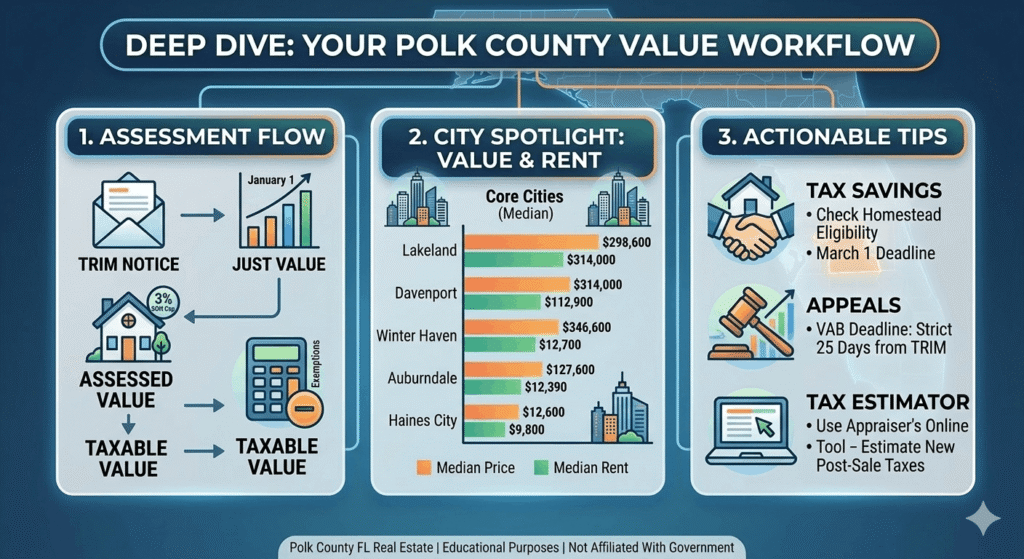
In Florida, your property value is directly tied to your annual tax liability. Property taxes in 2026 are calculated based on the Just/Market values established by the Polk County Property Appraiser as of January 1st of the tax year.
Annual Valuations and Levy Impact
The total tax rate combines county levies, local municipality millage rates, and school district infrastructure taxes. Typically, property owners can expect an overall millage impact resulting in an effective tax rate of 1.0% to 1.2% of the property’s assessed value.
⚠️ Important Note for Homeowners: Assessed Value is not the same as Market Value. Thanks to Florida’s Save Our Homes (SOH) amendment, the assessed value of a primary homestead property cannot increase by more than 3% annually, protecting long-term residents from sudden tax spikes even if market values skyrocket.
Appeals and Value Adjustment Board (VAB)
Every August, the Property Appraiser sends out the TRIM (Truth in Millage) notice. This notice outlines your property’s assessed value and estimated taxes.
- If you feel your property has been overvalued or an exemption was improperly denied, you can attend local Open Book Meetings with deputy appraisers.
- If a resolution isn’t reached, property owners have a strict deadline (usually 25 days from the mailing of the TRIM notice) to file a formal appeal petition with the Polk County Value Adjustment Board (VAB).
Strategic Tips for Buyers and Sellers in 2026
Navigating a stabilized market requires specific transactional approaches depending on which side of the closing table you sit on.
For Home Buyers
- Factor in True Tax Costs: Do not rely on the seller’s current tax bill. Use the Polk County Property Appraiser’s tax estimator tool to calculate what your taxes will be after the property resets upon sale.
- Explore Growing Sub-Markets: If Davenport or Lakeland prices stretch your budget, look toward stabilizing inventories in Winter Haven or Auburndale for better dollar-per-square-foot ratios.
- Utilize Mortgage Pre-Approvals: Sellers in 2026 favor clean, certain offers over speculative bids. Ensure your financing is locked in before making an offer.
For Home Sellers
- Price Against Real Comp Data: With median days on market hovering around 58 to 68 days for well-priced homes, overpricing a listing in 2026 will cause it to stagnate.
- Leverage Location Highlights: If your property is located in high-demand zones like Lakeland or near top-performing public magnet programs, emphasize these community perks in your marketing.
- Address Minor Inspection Red Flags: Since buyers have more options in 2026, minor deferred maintenance can break a deal during the escrow period.
Community & School Infrastructure Insights
Real estate values do not exist in a vacuum; they are heavily influenced by hyper-local infrastructure and school districts. Families moving to Polk County frequently target residential pockets with strong public school metrics. Top-rated choices like Groveland Elementary, Forest Hills Elementary, and Hilltop Primary consistently draw positive attention for maintaining low student-to-teacher ratios and strong proficiency benchmarks, directly supporting the long-term valuation of surrounding subdivisions.
Conclusion
The 2026 real estate climate across Polk County, Florida offers a welcome landscape of predictability compared to the volatile swings of previous years. By keeping a close eye on property valuations, utilizing available homestead exemptions, and studying localized neighborhood data, buyers, sellers, and property investors can make highly informed, low-risk financial decisions.