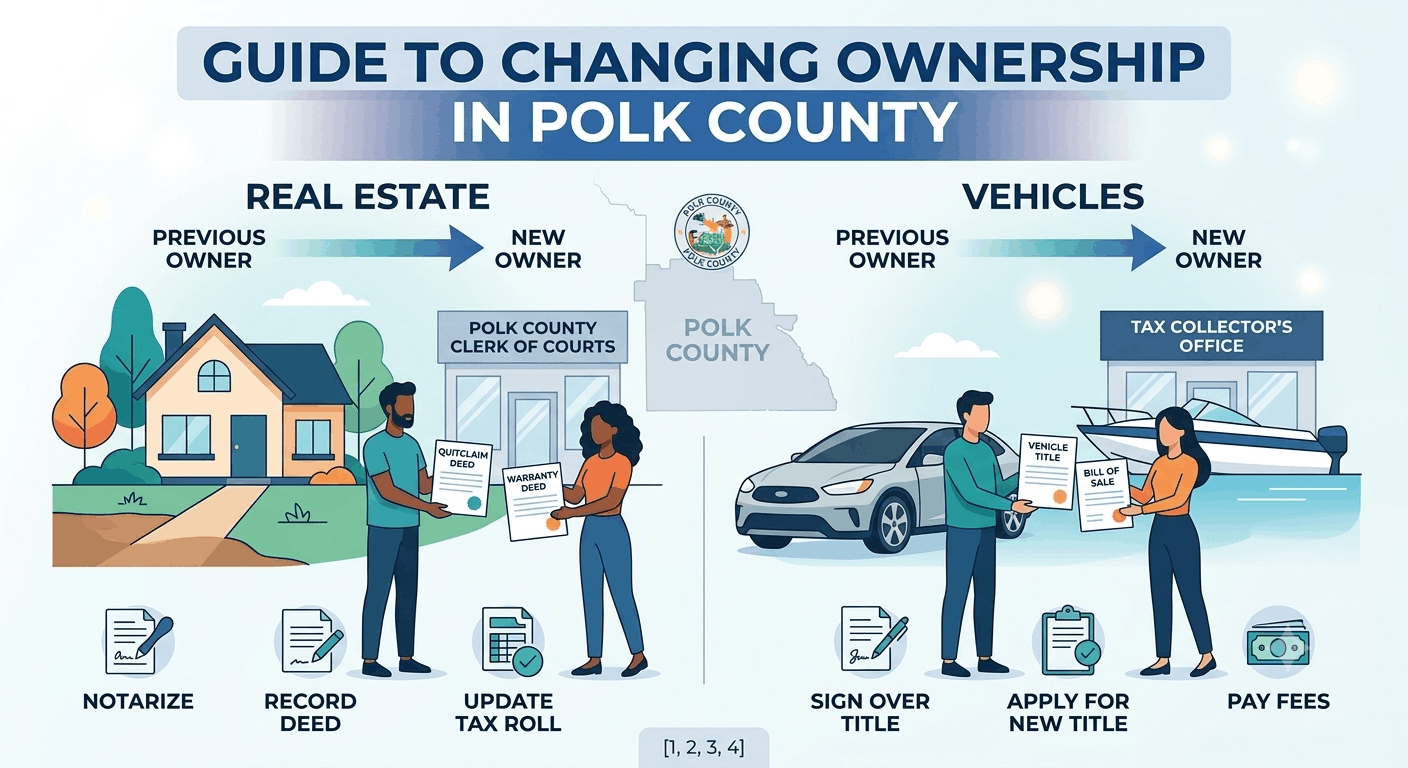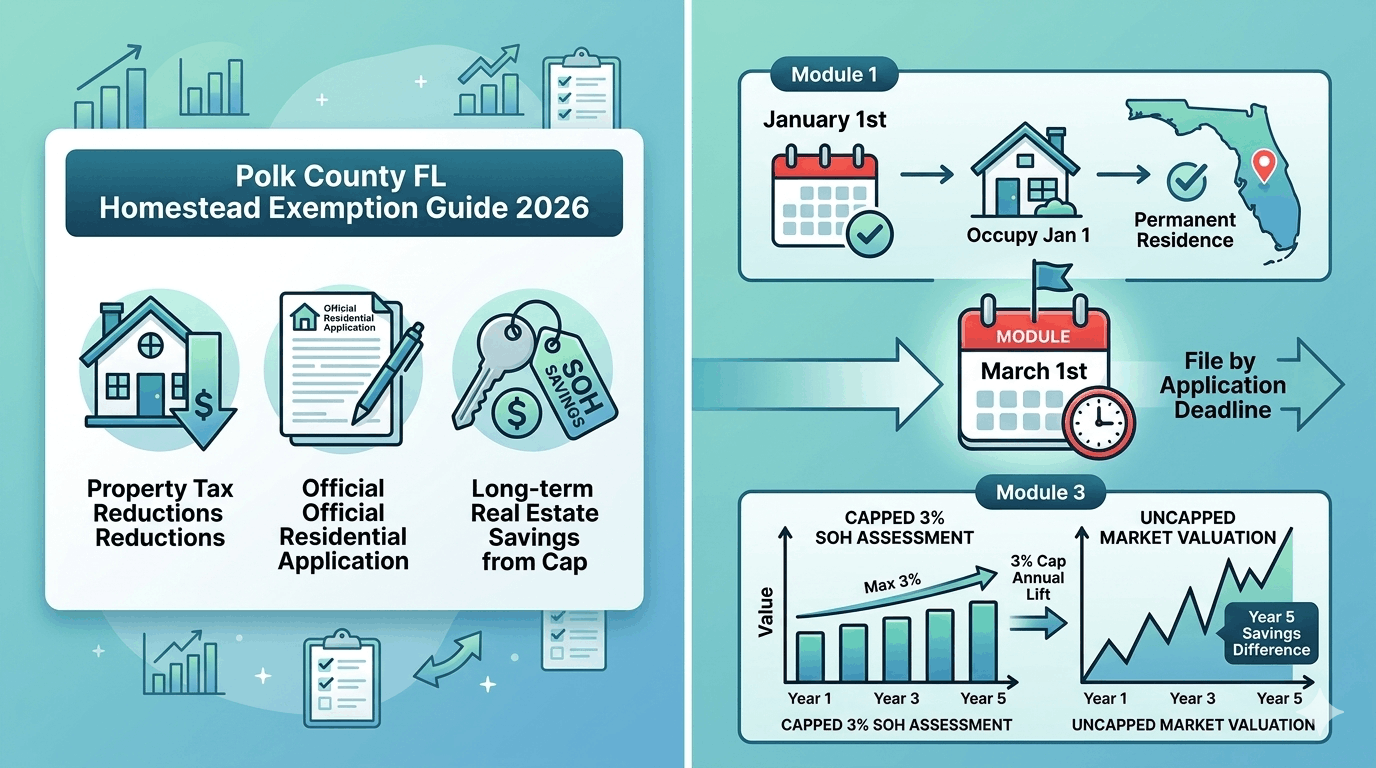
If you want to know how to change ownership in polk county, the process requires navigating distinct legal steps to update local government assessment maps and tax rolls. Whether you need to record a quitclaim deed with the Clerk of Courts or submit a transferred vehicle title to the Tax Collector’s Office, executing your paperwork accurately ensures a seamless ownership transition.
Complete Guide to Transferring Property and Vehicle Titles in Polk County
Changing ownership of a high-value asset like a piece of real estate or a vehicle requires navigating distinct legal processes. In Polk County, the procedure depends heavily on whether you are transferring land or a motor vehicle. This step-by-step guide breaks down the requirements, forms, and filing locations to ensure your documentation satisfies local regulations and prevents processing delays.
Real Estate Property Ownership Transfer
Transferring real estate ownership requires creating and recording a new deed. This updates the public record and informs the local tax authorities of the change.
Step 1: Select and Draft the Correct Deed
To initiate a real estate transfer, you must choose the appropriate legal deed structure based on your transaction type:
- Quitclaim Deed: Frequently used for transfers between family members, gifting property, or adding a spouse to a title. It transfers ownership without making legal guarantees about the title’s history.
- Warranty Deed: Standard for traditional real estate sales. It guarantees that the seller holds clear title to the property and has the right to transfer it.
- Special Warranty Deed: Often used in commercial transactions or by executors, guaranteeing the title only against defects created during the current owner’s tenure.
Professional Note: It is highly recommended to use a title company or real estate attorney when drafting these documents. An accurate legal property description and precise formatting are mandatory to avoid filing rejections.
Step 2: Formal Notarization
Before a deed can be officially recorded, it must be properly executed. All grantors (the current owners transferring the property) must sign the document. This signing must take place in the physical or electronic presence of a licensed notary public. Depending on state laws, additional witness signatures may also be required on the document.
Step 3: Record the Deed with the Local Authority
The signed and notarized deed must be filed with the county’s official records office to legally finalize the transfer:
- In Florida: Submit the original document to the Polk County Clerk of Courts.
- In North Carolina, Missouri, or Iowa: File the document with the local Register of Deeds office.
You can submit the deed physically by mail, in person, or via an approved e-recording platform. You must pay all required recording fees and documentary stamp taxes at the time of submission.
Step 4: Tax Roll and Assessment Updates
Once recorded, the Clerk or Register’s office forwards the transaction details to the Polk County Property Appraiser. The appraiser updates the county assessment maps and tax rolls to reflect the new ownership for the upcoming tax cycle.
Vehicles, Boats, or Mobile Homes Ownership Transfer
Transferring titles for motor vehicles, vessels, or mobile homes follows a distinct administrative path handled by the tax collector or motor vehicle division.
Step 1: Execute the Title and Bill of Sale
The current owner must officially sign over the existing certificate of title to the buyer. In addition to the title transfer sections, both parties should complete a formal Bill of Sale. This document establishes the purchase price, transaction date, or indicates if the asset is a gift.
Step 2: Submit the Application for a New Title
The new owner must present the following documentation to the local Tax Collector’s Office (or the relevant state motor vehicle agency):
- The properly assigned original title.
- A completed Application for Certificate of Title/Registration.
- Valid government-issued photo identification.
- Proof of active insurance coverage for the vehicle.
Step 3: Settle Fees and Applicable Taxes
The transfer is completed upon payment of all necessary administrative fees. For example, in Florida, the base vehicle title transfer fee is $35, which does not include regional registration costs or local sales taxes based on the purchase price.
Quick Reference: Real Estate vs. Vehicle Transfers
The table below outlines the primary structural differences between the two processes in Polk County:
| Feature | Real Estate (Property Transfer) | Vehicles, Boats, & Mobile Homes |
| Primary Document | Warranty, Quitclaim, or Special Warranty Deed | Assigned Certificate of Title & Bill of Sale |
| Filing Agency | Clerk of Courts or Register of Deeds | Tax Collector’s Office / DMV |
| Notarization | Required for all Grantor signatures | Recommended for Bill of Sale / Required on some titles |
| Downstream Impact | Updates Property Appraiser tax rolls | Updates state registration and issues new license plates |
| Key Fees | Recording fees & Documentary Stamp Taxes | Base title fee (e.g., $35 in FL) + sales tax & registration |
Document Flow and Processing Pipeline
The layout below illustrates the processing sequence required for both types of ownership changes:
[Real Estate Process]
Draft Correct Deed (Attn: Legal Specs) ➔ Sign Before Notary ➔ Submit to Clerk/Register ➔ Property Appraiser Updates Tax Roll

[Vehicle/Boat Process]
Sign Title Over + Write Bill of Sale ➔ Gather ID & Proof of Insurance ➔ Submit to Tax Collector ➔ Process New Registration & Plates
Common Mistakes to Avoid During the Transfer Process
To ensure your application is processed efficiently without being rejected by county administrators, avoid these frequent errors:
- Incorrect Legal Descriptions: For real estate, using a postal address instead of the exact legal metes-and-bounds description found on previous deeds will cause immediate rejection.
- Missing Notary Seals: Ensure all signatures matching the current title or deed are fully notarized before filing.
- Unpaid Fees: Applications submitted without the correct recording fees or calculated documentary stamp taxes will be returned unexecuted.
- Odometer Discrepancies: When transferring a motor vehicle title, ensure the odometer reading is recorded accurately without alterations or white-out corrections.
Conclusion: Ensuring a Smooth Ownership Transfer
Changing ownership of property or a vehicle in Polk County is a straightforward process, provided you follow the legal requirements precisely. Whether you are recording a deed with the Clerk of Courts to safeguard real estate assets or submitting a title application to the Tax Collector for a vehicle transfer, accuracy is your best tool to avoid costly delays. By gathering the correct documents, obtaining the necessary notarizations, and paying the required local fees promptly, you can ensure a seamless transition that updates county tax rolls and registration maps without any administrative hurdles.
FAQs
How long does it take for a new deed to show up in Polk County records?
After a real estate deed is recorded with the Clerk of Courts, it typically takes 4 to 6 weeks for the Property Appraiser to update the public website.
Can the county office help me draft my deed?
No, county administrative offices cannot prepare legal documents or provide legal advice. You should consult a real estate attorney or title company to avoid filing rejections.
What is the difference between “AND” vs. “OR” on a vehicle title?
“OR”: Either listed owner can sign to transfer or sell the vehicle independently.
“AND”: All listed owners must sign the title to officially transfer ownership.
What is the deadline to transfer a vehicle title after purchase?
You must apply for a new title within 30 days of the sale date to avoid automatic late transfer penalties and fees.
Do I need a notary to remove a co-owner from a property deed?
Yes, the person being removed from the title must sign a new deed in the presence of two witnesses and a notary public before it can be legally recorded.